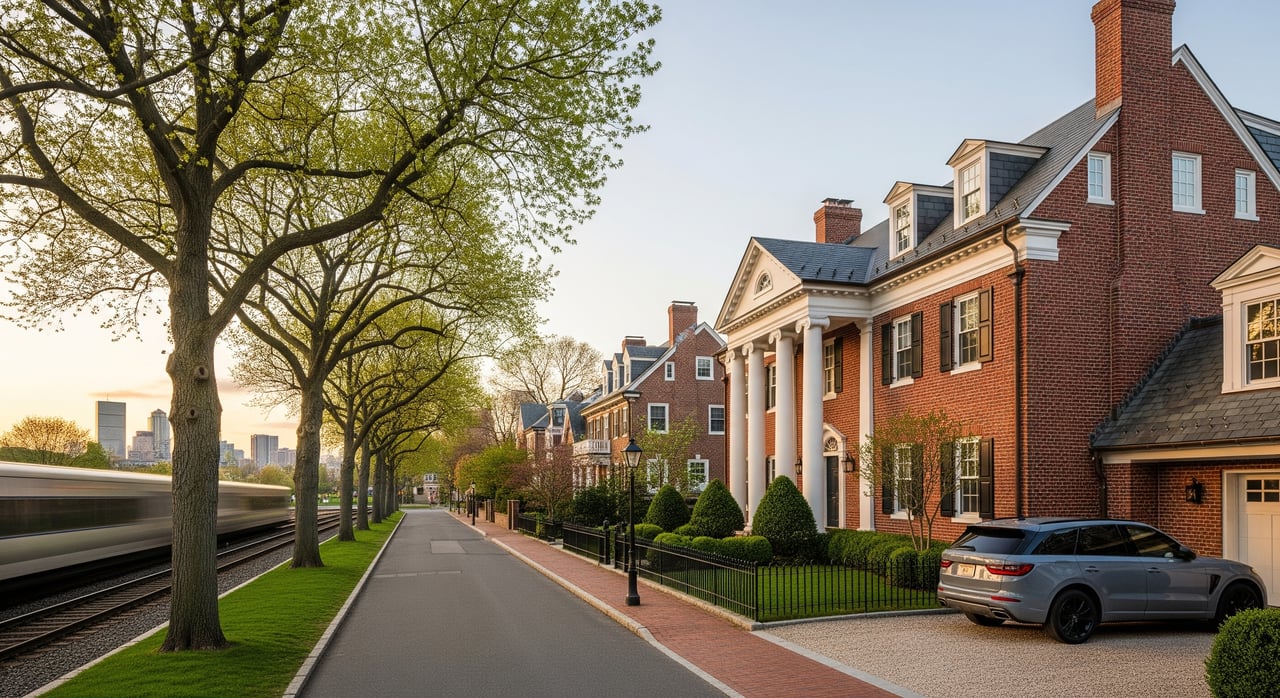
Trying to decide between Newton and Wellesley for your next move? You’re not alone. Both offer strong schools, green space, and access to Boston, yet the day-to-day feel can be very different. In this guide, you’ll get a clear, side-by-side look at housing, commute options, and daily life so you can plan tours with confidence and narrow your search faster. Let’s dive in.
Newton vs. Wellesley at a glance
Both towns sit west of Boston and are known for high household incomes and home values compared with state averages. Newton is closer to downtown Boston and is made up of multiple distinct villages with a blend of urban and suburban character. Wellesley is further west and feels more uniformly suburban, with larger lots and fewer commercial corridors. Each town has its own municipal government, school system, and zoning rules.
If you want more housing variety and frequent subway access, Newton’s village structure and transit network stand out. If you want larger single-family lots and a quieter, suburban setting, Wellesley offers that experience more consistently.
Housing: styles, lots, price spectrum
Newton housing overview
Newton offers a broad mix of single-family homes, condos, and multifamily properties. You’ll see early 20th-century Victorians and Colonials, Tudors, Arts & Crafts, mid-century ranches, and newer infill. Lot sizes vary by village, with some areas closer to Boston featuring smaller lots and higher density.
Because there is more multifamily and condo stock relative to Wellesley, Newton typically provides a wider range of price points. That can be helpful if you’re moving up from a condo, downsizing, or looking for an entry point near Boston.
Key villages to tour include Newton Centre for a walkable core near the MBTA Green Line, West Newton and Newtonville for commuter-rail access and diverse housing, and Waban, Chestnut Hill, Newton Highlands, Auburndale, and Nonantum for distinct neighborhood identities. Newton often feels like many small towns within one city, so compare several villages to understand differences in lot size, sidewalks, and commercial activity.
Wellesley housing overview
Wellesley is predominantly single-family with larger lots and a strong inventory of Colonials and Shingle-style homes. You’ll find early and mid-20th-century estates alongside newer luxury infill. Zoning is more restrictive, with fewer multifamily parcels and less rental inventory.
Housing centers on Wellesley Square, Wellesley Hills, and Wellesley Farms, plus quieter pockets like Lower Falls. The result is a consistent suburban feel with fewer commercial corridors than Newton and more emphasis on privacy and yard space.
Zoning and development snapshot
- Wellesley: More restrictive single-family zoning, multiple historic districts, and fewer opportunities for subdivision or multifamily redevelopment.
- Newton: Mixed zoning with higher-density allowances in some village centers and corridors, plus multiple historic districts. Larger neighborhoods may allow more redevelopment.
Practical takeaway: If you prioritize larger lots and single-family privacy, Wellesley will likely deliver more consistent options. If you want varied housing types and proximity to transit, Newton provides more variety across its villages.
Commute and transportation
Public transit options
Newton is served by the MBTA Green Line D branch in several villages and by Framingham/Worcester commuter-rail stations. This gives you direct or single-transfer access to Back Bay, Brookline, and downtown Boston with higher frequency on the Green Line.
Wellesley is not on the subway but has three commuter-rail stations on the Framingham/Worcester Line. The commuter rail offers predictable rides into Back Bay and South Station, although trains are less frequent than the Green Line.
Driving and highway access
Route 9 runs through parts of both towns, providing an east-west corridor into Boston and connections to the Mass Pike. Newton’s closer proximity to Boston can translate to shorter off-peak drive times, though major arteries back up during rush hour. Wellesley sits closer to I-95/Route 128 and has good access to the Mass Pike depending on the route, which helps for suburban or westward commutes.
Parking and frequency tradeoffs
Newton’s village centers have street parking and varying availability near Green Line or commuter-rail stations. Wellesley’s commuter-rail stations have lots that can fill early on weekdays with local permit or time-limit rules. The Green Line offers greater daytime flexibility, while the commuter rail provides a comfortable, sit-down ride on a set schedule.
Daily life: schools, amenities, parks
Schools and education
Both towns have well-regarded public school systems with strong performance compared with state averages. Wellesley public schools often rank near the top on statewide metrics, and Newton Public Schools also perform strongly, with multiple elementary schools by village and centralized middle and high school options. For any property you consider, review current DESE profiles, boundary maps, class sizes, and specialty programs to confirm fit.
Private and higher education options are nearby. Wellesley College is a major institution in Wellesley, and Newton has several private schools and proximity to many Boston-area colleges and universities.
Village life, retail, and dining
Newton has multiple village centers and commercial corridors with restaurants, independent shops, grocery options, and boutique services. Walkability varies by village, giving you several choices for daily errands and dining.
Wellesley’s day-to-day life concentrates around Wellesley Square, with additional shops and cafes in Wellesley Hills and smaller nodes elsewhere. Many neighborhoods are more car-oriented, which contributes to quieter residential streets away from the center.
Parks, open space, and recreation
Newton offers numerous parks and conservation parcels, plus access to the Charles River and community programs. Notable spots include Crystal Lake, Nahanton Park along the river, and connections into nearby park systems.
Wellesley features larger green spaces like Elm Bank Reservation and the Wellesley College arboretum, along with extensive town conservation land, trails, and athletic fields. Both towns support active outdoor lifestyles. Wellesley’s larger lots and contiguous conservation areas feel more parklike, while Newton’s river corridors and neighborhood parks suit a mixed urban and suburban routine.
Property taxes and services
Property taxes depend on assessed value and each town’s tax rate. Because Wellesley home values are often higher, dollar tax bills can be higher even when rates differ. Utility providers vary by location, and sewer versus septic can differ by neighborhood, so verify these details during tours. Both towns maintain active libraries, recreation departments, and community programming.
Which town fits you? A quick checklist
Use this list to rank what matters most:
- Commute priority: frequent subway access or predictable commuter-rail schedule
- Lot size and privacy: larger yard or village proximity and walkability
- Housing type: single-family only or openness to condos and multifamily
- School preferences: program offerings, class sizes, boundaries
- Lifestyle: walkable errands and dining or a quieter, car-oriented neighborhood
- Budget and resale: expected price band and market liquidity
- Noise tolerance: proximity to commercial corridors, highways, or rail
- Long-term plans: aging in place, downsizing, or accessory dwelling potential
Plan a one-day tour
Morning in Newton (9:00–11:30)
- Walk Newton Centre to see village energy, shops, and MBTA Green Line access.
- Compare West Newton or Newtonville for commuter-rail access and a denser block pattern.
- Drive a higher-end neighborhood such as Chestnut Hill or Waban to gauge lot size and architectural variety.
Focus on transit options, sidewalks, typical housing stock, and parking conditions in each village.
Midday in Wellesley (11:30–1:30)
- Lunch and walk Wellesley Square for a feel of the town center.
- Visit Wellesley Hills and a Wellesley Farms area to experience larger lots, quieter streets, and green space.
Assess walkability of the center, scale of lots, commuter-rail access, and proximity to parks.
Afternoon follow-up (1:30–4:00)
- Return to Newton for targeted property viewings selected to match your priorities and budget.
- Drive likely school routes and visit a playground or field. If possible, observe pickup or dropoff to understand traffic patterns.
- End with a brief review of comparable listings and any permit, tax, or school-boundary questions.
Timing and field tips
- Visit during a weekday rush hour and a weekend to compare traffic, train frequency, and parking.
- Note transit proximity, lot size, sidewalks, school assignments, and neighborhood noise at each stop.
- Ask about sewer versus septic, recent assessments, and any planned municipal projects nearby.
Resale and long-term considerations
Newton’s varied inventory draws a broad buyer pool across price points, which can support liquidity depending on village and condition. Wellesley’s smaller inventory and higher price tiers see strong demand for larger lots and luxury homes, though the top end can be more cyclical.
For both towns, monitor school performance trends, municipal planning updates, and capital projects. These can influence neighborhood desirability, commute patterns, and long-term value.
Ready to compare properties and map a tour that fits your life? Reach out to Ned O’Neill for a personalized, village-by-village strategy. If you are selling as part of your move, you can also request a Free Home Valuation to plan timing and budget with clarity.
FAQs
Which town offers the shorter commute to downtown Boston?
- Newton is closer and has MBTA Green Line access for higher frequency, while Wellesley’s commuter rail offers predictable rides on a set schedule.
How do Newton and Wellesley public schools compare?
- Both systems are well regarded; Wellesley often ranks near the top statewide, and Newton also performs strongly. Confirm fit by reviewing current school profiles and boundaries.
Where will I find more housing variety and price points?
- Newton typically offers a wider range of homes, including condos and multifamily options, across its many villages.
Which town is better for larger lots and single-family privacy?
- Wellesley more consistently offers larger single-family lots with a quieter suburban feel.
How do village centers and walkability differ?
- Newton has multiple walkable village nodes, while Wellesley concentrates most day-to-day activity in Wellesley Square with quieter, more car-oriented neighborhoods beyond.